Hotel Management Software Development: Features & Cost
-
 Ankit Patel
 - September 25, 2023
- 7 min read

Why is hotel management software development becoming the hottest trend in 2026? Why are hotels around the world investing heavily in smart, AI-powered systems?
The hospitality industry is under more pressure than ever. Guests expect seamless check-ins, instant bookings, and personalized experiences. Staff are juggling reservations, payments, housekeeping, and room maintenance, often across multiple spreadsheets, outdated systems, or disconnected tools. One missed booking or delayed service, and your guest is gone, maybe forever.
This is where hotel management software (HMS) comes in. A powerful HMS does more than organize your hotel operations. It transforms them. From automating repetitive tasks to optimizing room rates, streamlining housekeeping, and tracking guest preferences, modern systems turn chaos into efficiency, revenue, and exceptional experiences.
So how do you build or implement a hotel management system that actually works for your business? How do you select the right features, integrate AI, and ensure it delivers real results?
In this guide, we will break down everything, from essential features and development steps to costs and the latest trends, so you can create a hotel management system that not only functions but also drives growth, satisfaction, and efficiency.
◉ What is a Hotel Management System?
A hotel management system is software that helps hotels manage day-to-day operations. It allows property owners and managers to handle:
- Reservations and bookings
- Check-in and check-out
- Billing and payment processing
- Housekeeping and inventory management
- Marketing and customer relationship management (CRM)
Modern HMS platforms are usually cloud-based and can integrate with online travel agencies, payment gateways, accounting systems, and AI-powered personalization tools. This integration ensures that hotels have real-time information, improve efficiency, and provide consistent experiences across all guest touchpoints.
With the right system, hotels can manage reservations, staff, inventory, billing, and reporting all from a single dashboard. Every booking and request is tracked automatically, reducing errors and freeing up staff to focus on guest experiences.
◉ Hotel Management Statistics
The hotel industry is a crucial sector of the global economy, contributing trillions to GDP and employing millions. After recovering from the pandemic, the industry has embraced technology and digital solutions faster than ever.
- According to IBIS World, the global hotel and resorts market is projected to reach $1.8 trillion by 2026.
- The global hospitality market size is expected to reach $7011.13 billion in 2029.
- The most popular tourist destinations in the world are Paris, Rome, Tokyo, Dubai, and New York.
The adoption of AI, mobile-first booking, and contactless services is reshaping guest expectations and operational efficiency.
◉ Why the Hotel Industry Needs Modern Software
Hotels today face challenges that never existed a few years ago. Guests expect fast service and personalized experiences. Staff work under constant pressure, juggling multiple tools and tasks. Hotels also need to maximize revenue while keeping costs under control.
Some common challenges include:
- Front desk staff overwhelmed during busy periods.
- Manual tracking of rooms, bookings, and housekeeping.
- Missed revenue opportunities due to inefficient pricing.
- Lack of real-time insights for decision-making.
- Difficulty managing data from multiple online platforms.
A modern hotel management system addresses these challenges. It automates operations, centralizes data, improves communication between departments, and provides insights to make smarter business decisions.
◉ Different Types of Hotel Management Software
Hotels can choose from several types of software depending on their size, scope, and business model. The main types include:
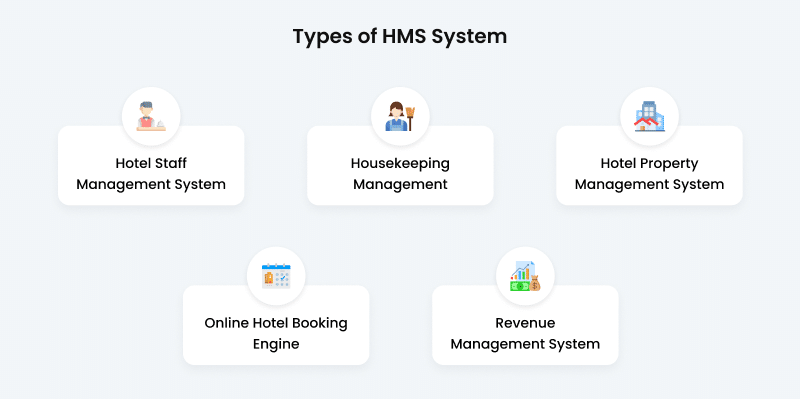
• Hotel Staff Management System
This system helps manage your team, track performance, and assign tasks. AI-based scheduling tools can predict peak times and optimize staff allocation.
• Housekeeping Management
This software schedules cleaning, tracks progress, and ensures maintenance tasks are completed efficiently. Mobile updates allow housekeeping staff to report room status instantly.
• Hotel Property Management System (PMS)
A PMS handles front desk operations like bookings, check-ins and check-outs, billing, and reporting. Cloud-based PMS platforms provide remote access and integrate with OTAs, payment gateways, and analytics tools.
• Online Hotel Booking Engine
This platform allows hotels to manage direct bookings online. It reduces dependency on third-party platforms and helps hotels increase revenue through promotions, loyalty programs, and personalized offers.
• Revenue Management System
A revenue management system optimizes pricing based on demand, events, and seasonal trends. AI-driven tools can suggest rates for maximum occupancy and revenue.
Also check: How Much Does Custom Software Development Cost?
◉ Benefits of Building a Hotel Management Software
Developing a hotel management software can provide many benefits for your hotel business, such as:
- Improving operational efficiency: Automating routine tasks such as bookings, billing, and housekeeping reduces errors and saves time for your staff.
- – Enhanced Guest Experience: Mobile check-ins, personalized recommendations, and faster service lead to higher satisfaction and loyalty.
- Revenue Growth: Dynamic pricing, upselling, and cross-selling improve average daily rate, revenue per available room, and revenue per guest.
- Data-Driven Decision Making: Real-time dashboards and AI analytics give managers clear insights to make better decisions and plan for growth.
Also check: Travel App Development – Cost, Benefits, Features
◉ Must-Have Features for Modern Hotel Software
A modern HMS is not just a tool—it’s the backbone of your hotel operations. The right features help staff work smarter, not harder, and give guests a seamless experience. Let’s explore the features in detail:
• Reservation Management
Booking is the heart of your hotel. A strong reservation system allows you to handle online, offline, walk-in, and group bookings without errors. Modern systems automatically sync reservations across multiple channels like OTAs, your website, and phone bookings. This means no double-bookings, instant confirmation emails or SMS for guests, and a dashboard where staff can see all upcoming reservations at one glance.
• Check-in and Check-out Management
This is where first impressions happen. A digital check-in/check-out system reduces long lines and improves efficiency. Mobile check-in, self-service kiosks, and digital room keys not only save time but also enhance the guest experience. The system can also handle early or late check-ins, no-shows, and automatic billing, so staff can focus on guest interaction rather than paperwork.
• Room Management
Managing rooms goes far beyond knowing which rooms are occupied. A modern system tracks availability, maintenance status, housekeeping schedules, and amenities. It can alert staff if a room needs repair or cleaning before the guest arrives, ensuring perfect readiness. Smart room management can even suggest optimal room assignments based on guest preferences and booking patterns.
• Billing and Payment Management
Handling payments accurately is critical. An integrated billing system lets guests pay using multiple methods, including online payments, credit cards, and contactless options. Automatic invoicing reduces errors and provides clear financial records for management. Advanced systems can also track revenue per guest, per room, or per service, giving managers real insights into profitability.
• Customer Management
Personalization is key to loyalty. A built-in CRM stores guest profiles, including preferences, booking history, special requests, and loyalty points. AI-driven insights allow hotels to offer personalized promotions, anticipate guest needs, and send follow-up messages to encourage repeat stays. This feature turns data into long-term customer loyalty.
• Reporting and Analytics
Data is power. A robust HMS provides dashboards showing occupancy rates, revenue, average daily rate, and guest satisfaction scores. Advanced systems use AI to predict trends, forecast occupancy, and suggest pricing strategies. Managers can filter and export reports to make strategic decisions and improve operational efficiency.
Also check: How Cloud-Based Mobile ERP Revolutionizes Modern Enterprises?
◉ Hotel Management Software Development: A Step-by-Step Guide
Building a custom HMS is not just about coding. It’s a structured process that ensures the system matches your hotel’s unique needs.
Step 1: Define Scope and Requirements
Start by understanding your hotel’s pain points. Identify what departments will use the system, which features are critical, and what problems it should solve. For example, do you need advanced revenue management? Mobile check-in capabilities? AI-based reporting? Determine your budget, timelines, and stakeholder roles. This step lays the foundation for a system that works, not just looks good.
Step 2: Choose Development Approach and Technology
Decide whether to build from scratch, customize an existing platform, or hire a development partner. Select the technology stack that fits your needs—cloud-based platforms for flexibility, mobile-first design for convenience, and AI integration for predictive analytics. Security and compliance should also be considered from day one.
Step 3: Design Architecture and User Experience
This is where ideas become reality. Map out how data flows between departments, how staff interact with the system, and what the guest-facing experience looks like. Wireframes, mockups, and prototypes help visualize the final product. Focus on creating an intuitive, easy-to-use interface that reduces training time and errors.
Step 4: Development and Testing
This phase is about turning designs into working software. Developers implement each feature, integrate modules, and ensure compatibility across devices. Rigorous testing—unit tests, system tests, and real-world simulations—ensures the software is reliable, fast, and error-free.
Step 5: Deployment and Continuous Improvement
Launch your HMS on the target platform and train your staff. Monitor performance closely and gather feedback from both employees and guests. Modern systems are continuously updated with new features, AI improvements, and security patches. A good HMS evolves with your hotel rather than becoming obsolete.
◉ Cost to Build a Hotel Management System
The cost of building a hotel management software can vary significantly depending on several key factors. To determine the accurate budget, you should take into account the following factors:
- Project complexity
- features and functionality required
- Team size and expertise
- The geographic location of the company you choose
- Technology stack
- Security and compliance
- Maintenance and updates
Given the wide range of factors involved, it can be challenging to provide an estimation for the cost without knowing your specific requirements. It’s worth noting that hourly pricing for dedicated hiring can vary by region, as shown in the table below.
| Region | Hourly Rate Range |
| North America | $60 – $150 |
| Latin America | $25 – $55 |
| Europe | $35 – $80 |
| Middle East | $45 – $75 |
| Asian Countries | $20 – $50 |
However, if we have to provide an estimated budget, the cost of hotel management software and its accompanying mobile app would be around $40,000 to $150,000 or more. However, the final price can vary depending on the specific features and requirements of each client.
◉ Elevate Your Hotel Business With XongoLab’s Expertise
At XongoLab, we specialize in hotel management software development for the hospitality industry. We understand the unique challenges hotels face and design solutions that streamline operations, improve guest experiences, and maximize revenue.
Whether you need a fully custom hotel management system or are looking for ready-made solutions, we have you covered. Our prebuilt booking engine and hotel booking app allow hotels to start accepting reservations immediately, providing a seamless experience for both staff and guests.
With our expertise, your hotel can leverage technology to stay ahead of the competition, optimize daily operations, and deliver exceptional service consistently.
◉ Wrapping Up
Hotel management today is complex, fast-paced, and demanding. Guests expect speed, personalization, and seamless service. Staff are required to manage multiple operations simultaneously, and hotels must maximize revenue while maintaining high standards.
A modern hotel management system addresses these challenges by centralizing operations, automating repetitive tasks, providing real-time insights, and optimizing revenue. From reservations and billing to housekeeping and guest management, every aspect becomes more efficient, accurate, and data-driven.
In 2026, hotels without a comprehensive, smart HMS are operating at a disadvantage. The right system doesn’t just support your business—it shapes how your hotel performs, adapts, and grows in a competitive environment.

Ankit Patel is a Project/Delivery Manager at XongoLab Technologies LLP and PeppyOcean, A leading mobile app development company. In his free time, He likes to write articles about technology, marketing, business, web, and mobile. His articles featured on YourStory, E27, Datafloq, JaxEnter, TechTarget, eLearningAdobe, DesignWebKit, InstantShift, Business Magazine, SimpleProgrammer, and many more.
You may also like
How Agentic AI Is Transforming SaaS Applications
- Ankit Patel
Software-as-a-Service has always promised efficiency. But until recently, most SaaS products still depended heavily on human effort — clicking buttons, setting rules, monitoring dashboards, and reacting to problems after they… Read More

AI Chatbot Development Cost 2026: Enterprise Pricing Guide
- Jignesh Nakrani

If there’s one technology that is reshaping how modern businesses operate, it is AI chatbots, and that is not an overstatement. Today, 78% of global enterprises use conversational AI in… Read More

Top 10 AI Agent Use Cases Driving Business Growth in 2026
- Ankit Patel
Repetitive tasks, endless approvals, and drowning in data are common challenges for businesses today. But imagine if all of that could disappear. Welcome to the world of AI agents for… Read More